Tuesday, June 11, 2013

72-hour kit: Can opener

Photo courtesy of Wikipedia Commons.
 
 
As far as 72-hour kits go, I try not to pack any food that requires a can opener, so I personally do not need a can opener in my kit.

However, I think that it is VERY important to have an extra can opener available in your home. So much of what we store is canned food, so it seems only practical to have an extra opener around...maybe even two...or three.

Last year, our can opener died. The gear thing bent and it was toast...and it was Sunday...and I was in the middle of making dinner...and I needed a can of pineapple.

So off to the neighbors I went. It only took 4 doors until I found one. It was totally embarrassing.

The next day we went out and bought TWO can openers.
 
Today I am back down to ONE...and it's not even one of the two I bought last year. I need to add a can opener to my next shopping list for sure.


This is step 6 on the PLAN 9 pamphlet put together by the Southwest Utah Public Health Department.

See right side of blog for additional steps.

Tuesday, May 28, 2013

Shelf Life website

I recently found this awesome website called Still Tasty. On this site you can search different foods and it will tell you how long this food will last on the shelf, in the refrigerator or in the freezer. Manufacturer's expiration dates are very conservative and you can almost always use food items after their printed dates. This website often mentions this and I can say for a fact that I have used "expired" items dozens of times without any issues.

For example, I searched "eggs" on the site. First it comes up with all kinds of options such as "eggs-cooked, hard boiled" or "eggs: scrambled, poached, fried, omelets, frittatas-cooked leftovers."

I selected: "eggs: fresh, raw, in the shell." It states that eggs can be stored in the refrigerator for 3-5 weeks. It also recommends storing eggs in the carton from the store and not in the door, which is warmer than the main part of the fridge.

The site also states that you can freeze eggs for up to a year, but first you crack the eggs, mix them with a little salt or sugar (depending on what you plan to use them for) and place them in an airtight container or freezer bag.

Interesting stuff, huh? So this site might be my new best friend...or at least a great resource when it comes to storing food for short- or long-term use.

This site can also be a great resource with your meal planning because you can check on the shelf life of foods you might be using in the next few weeks and decide how much of one item you might want to buy at once. I love buying things on sale or in bulk, so knowing the right way to store extra food is very valuable to me.

Tuesday, May 14, 2013

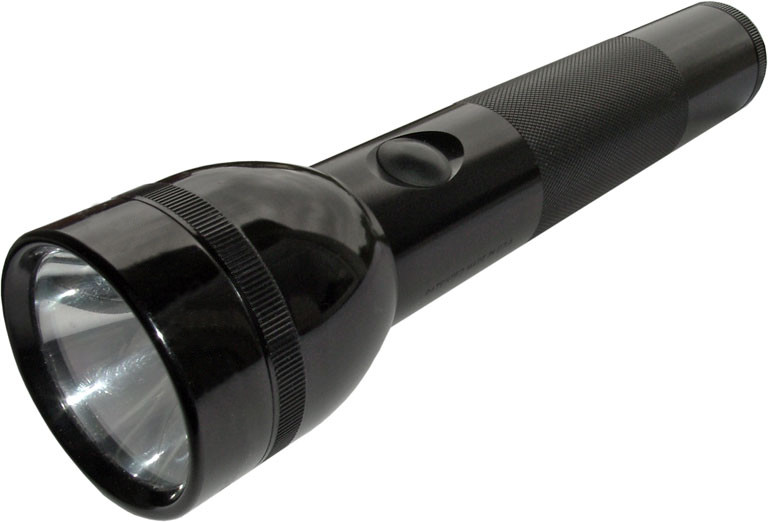
72-hour kit: Flashlights


Photo courtesy of Wikipedia Commons.

 
Every 72-hour kit should include a flashlight AND batteries.

Do not keep the batteries in the flashlight while it is being stored.

Having head-lamp type flashlights are a great idea considering you may have your hands full in an emergency.
 
A flashlight in your car is also very important, as well has having one or two around the house in case of a power-outage. For Christmas we received a cool flashlight that charges in a power outlet. It's small and the kids love to use it when they want to search for something under the couch or something. And I love it because they aren't wasting batteries. I think I need to get more of these, at least one for each level of the house.


This is step 5 on the PLAN 9 pamphlet put together by the Southwest Utah Public Health Department.


See right side of blog for additional steps.

Tuesday, May 7, 2013

3-month supply: Paper goods

It's been almost a year and a half and we are finally on the last category for building our 3-month supply!!
 
Don't worry, we're going to start over again. We always need reminders and new ideas. Plus, who has been able to collect their entire 3-month supply in the last year??
 
Anyone?
 
Not me.
 
I am a lot closer than I was before I started this blog, but I still have lots to do.
 
For example: I need LOTS more meat and I am planning on canning some chicken very soon, but I am due with baby #5 on May 16th, so it doesn't really sound fun to spend hours in the kitchen with a pressure cooker. My mom may come hang out with us next week so maybe we'll do it then. If not, I will have lots of frozen chicken for a while.
 
Another thing I am dealing with is space. I need to put a few shelves up in my storage room, which shouldn't be hard, but again, I am WAY prego and although I want it done it's not a top priority. I mainly need room for toilet paper. Sounds funny, I know, but I don't want to store TP on my heavy-duty shelves and I have been stocking up on TP a lot lately. There have been some great deals on Amazon lately...plus, I have 3 boys who don't seem to understand how precious that roll of paper is and it seems like we go through a roll a day!!!
 
I'm rambling.
 
Let's talk about our 3-month supply of PAPER GOODS!!!
 
Like a few other things we've talked about, this area is not the most crucial, so I wouldn't go out and buy a ton of paper goods if you don't have your basics. BUT, paper goods can make life SO much easy. Accumulating a little at a time and watching for sales can help you to eventually have quite a supply.
 
First, you make a list of what you use. Here's my list:
 
Paper towels
Paper plates
Paper bowls
Paper cups
Napkins
Plastic utensils
Freezer bags
Plastic wrap
Aluminum foil
Wax paper
Parchment paper (a splurge, but way nice for baking)
Freezer paper (I wrap all of my beef in freezer paper! One roll has lasted more than a year!)
 
 
Then, you decide how much to store of each item.
 
As a general rule with most things I want to store, I plan on having ONE extra on hand. That means one unopened box or container. Once I need to open it, I try to replace it with a new EXTRA. This way I always have one available.
 
This rule is good for most paper goods. I try to have one extra of all of the above. (Obviously, this doesn't mean one extra roll of paper towels, but a PACK of paper towels.
 
As far as prices go, these kind of items are hand to compare. There are so many types and you may prefer a particular brand. I usually go generic and buy the cheapest thing at Wal-Mart or one of the big warehouse stores. These stores are almost always cheaper than local grocery stores when it comes to paper goods. But buy what you will use, because this storage is not only for emergencies, but mainly for your every day use.
 
Remember:
 
Make a list
Decide how much you need
Watch for deals
Rotate!
 

Tuesday, April 30, 2013

Spring Cleaning

I recently came across this awesome Spring Cleaning Checklist on Studio 5's website (it's a TV show that broadcasts out of Salt Lake City).

Besides being SUPER CUTE, this checklist is really thorough and gives specific suggestions with each point. For example, it suggests that you not only empty your trash can in your bedroom, but you also CLEAN it. I clean my kitchen trash can semi-regularly but I haven't ever thought about cleaning my smaller trash cans. I don't know why I hadn't thought of that.

Anyway, I hope you enjoy this list!

Happy Spring cleaning!!!

Tuesday, April 23, 2013

Family Emergency Plan: Contact Cards

No one really likes to think about this kind of stuff, but ask yourself this:

How will you contact your family members in case of an emergency?

During the day, you might be at work, your spouse might be at work, your kids at school, etc. If you can't use your cell phone or if it is dead, do you know the numbers for your spouse's work or your kid's school?

FEMA suggests that you made a contact card for each family member which includes home, work, cell phone numbers as well as doctor's information and emergency contact numbers. Adults can store these cards in their wallets or purses. (Sometimes we take for granted that we have everyone's numbers in our cell phones, but if your phone battery dies and you can't charge it, you will want this contact information.) You can place cards in your school-aged child's backpack.

Click HERE for a printable PDF with contact card information as well as a brief family plan created by FEMA.

Click HERE for a printable PDF for a child's contact card created by FEMA.

Tuesday, April 16, 2013

Family Emergency Plan

So, you have your 72-hour kits all ready? (Maybe) Now what?

At my house lately, my 4-year old and 6-year old keep trying to sneak into their kits to eat their food. It has made me realize that we haven't talked about a Family Emergency Plan for a while.

Here are some tips:

Decide what kind of disasters could happen in your area?

You don't have to get too creative, just think of the basics: Fire, flood, earthquake, chemical spill (if you live near a major highway or interstate), etc.

If you live somewhere that is prone to flooding, look into purchasing flood insurance. Remember, homeowners insurance does not cover flooding.

This can be an important fact, especially in determining where you would meet the rest of your family or if you would need to stay home. For example, if your house is on fire, you would want a meeting place in your neighborhood. If there is a community-wide issue where they call for evacuation, you may have a different meeting place.

Create a basic emergency plan and discuss it as a family.

Click HERE for a printable PDF with a brief family plan created by FEMA as well as contact card information.

Microsoft also has a template (click HERE) you can download to fill out information on your family emergency plan.

Each of these templates ask you to record basic contact information, information on each family member, medical information. The Microsoft template also has an area to record insurance policy information and information on your family meeting places.


Where would you go if you needed to evacuate? And how would you get there is the main route was not an option?

I like to keep my gas tank at least half full all the time...partially so I don't have to fork out so much cash at one time, but MOSTLY because in case of an emergency or an evacuation, I can get somewhere without having to get gas. I am lucky enough to have parents who live about 3 hours south of me, which gives me somewhere close to travel to if my town was evacuated. I could also go 4 hours north to my brother. I have thought of this many times. What I don't know is how I would get to either place if the interstate was closed.


Check with for information on emergency procedures at places your family spends the most time, such as school, work, daycare, church, and extra-curricular activities like sports.

Get involved in your community.
Check with your community to see if there is a local emergency plan in place. For example, some communities have a Reverse 911 system where you can be contacted by text in case of an emergency. Some schools may also have a similar program in place. (After the shooting at the school in Connecticut, our kids' elementary school had those who wanted to participate to give their cell phone numbers to the principal who set it up so that he can send us a mass text in case of an emergency at the school.)


Some other things you might want to think of...

Smoke alarms and fire extinguishers.
Taking a CPR class or certification.
Making an Emergency Binder and copies to keep out of town.
Inventory of belongings, either video taped or written.


For more information: