Tuesday, June 26, 2012

Home organization: Getting family involved!

I don't know about you, but housework is NOT my favorite thing. I do it, because I don't like to have a messy house, but there are many other things I'd rather be doing than cleaning toilets and folding laundry.

The bigger our family gets, the more necessary it is for the rest of the family to chip in and do their part. It's good for my sanity and for my kids to learn responsiblilty.

Even if you don't have kids at home, share the responsibilities at home with those who live with you.

This takes some effort, especially at first, but don't get discourage. Give your kids (and your spouse) something to do. There are many different ways to do this.

There are about a million different job charts to choose from, even online job charts. We've tried several but what works best for us is a simple list.

Each of my kids has a list with their name and their daily jobs on the fridge. They each have 5-10 things based on their age and ability. My biggest boys can usually get through the jobs without even looking at the list.

We have some arguments about this still, but I just tell them that they are part of this family and they need to help. I think that it is SO important to teach our children about responsibility. This is a simple way to start while they are young. Older children need responsibilities too! They need to be expected to work.

Just last week, one of my favorite blogs, Prepared LDS Family, had a post on Summer Chore Lists. I was so glad to read it! I feel like so many parents are not taking charge and teaching their children hard work. When I was a teenager, I heard adults talking about this and was sometimes a little offended. Now I realize that they were mostly right. So many kids, and adults for that matter, think that others should do the hard work and they should benefit from it. Ranting. Sorry.

Bottom line: I want my kids to not only help out with keep our home looking decent, but I want them to learn the satisfaction of a "job well done."

Tuesday, June 19, 2012

72-hour kit: Can Opener


As far as 72-hour kits go, I try not to pack any food that requires a can opener, so I personally do not need a can opener in my kit.

However, I think that it is VERY important to have an extra can opener available. So much of what we store is canned food, so it seems only practical to have an extra opener around...maybe even two.

A few weeks ago, our can opener died. The gear thing bent and it was toast...and it was Sunday...and I was in the middle of making dinner...and I needed a can of pineapple.

So off to the neighbors I went. It only took 4 doors til I found one. It was totally embarrassing.

The next day we went out and bought TWO can openers.


This is step 6 on the PLAN 9 pamphlet put together by the Southwest Utah Public Health Department.

See right side of blog for additional steps.

Tuesday, June 5, 2012

3-month supply: Fats & Oils


Let's talk about a 3-month supply of Fats and Oils!!!

How much? 6 lbs. per person

Check out this 3-month supply worksheet to see more information.

This food storage calculator says 13 pounds for one person, for one year. That would be a little over 3 lbs per person for a 3-month supply.

What?

Some common items are:Any of various edible oils made from a plant source, such as vegetables, nuts or seeds.

Vegetable oil is inexpensive and easy to use. The term "vegetable oil" actually includes any edible oil made from a plant including vegetables, nuts and seeds. It does not have a strong flavor on its own so it can be used in baked goods, sauces and other foods. Canola oil has the lowest saturated fat content of the common oils. Shelf life for an unopened bottle can be 18-24 months.

Olive oil comes from crushed olives and is a great source of monounsaturated fat, vitamin E and other antioxidants. Olive oil has a strong flavor and is best when used for savory breads, dressings, meats and vegetables. Shelf life for an unopened bottle can last up to 24 months if stored properly.

Shortening is a fat, because it is solid at room temperature. It is commonly used to make crumby pastries and other baked goods. Shelf life, 6-8 months.

Mayonnaise or salad dressing. Mayonnaise is a condiment which consists of oil, egg yolk and either vinegar or lemon juice. Salad dressing is also a condiment and is similar to mayo, but has more sugar, vinegar and water and less egg yolk that mayo. Both products can be used in sandwiches, pasta salads, and more. Shelf life, 3-4 months.

Peanut butter is a food paste made of mostly ground dry roasted peanuts. Peanute butter contains monounsatruated fats, vitamins B3 and E, magnesium, floate, dietary fiber and is a good source of protein. Shelf life, from 6-24 months.

Butter is made by churning milk and is generally used as a condiment and spread but is also used in cooking and baking. There are several varieties of butter including fresh, powdered and canned. Fresh butter last several weeks in the fridge and can be frozen for several months at least. Powdered and canned milk can last several years.

Margarine is the term used for vegetable fat spreads. While butter comes from milk milk fat, margarine comes from plant oils and skimmed milk. Margarine can be used for the same purposed as butter. Margarine can be stored in the fridge for several weeks or frozen for several months.

Here's some pricing info:

Vegetable oil - $.05/oz.
Margarine- .05/oz.
Shortening-.08/oz.
Mayonnaise or salad dressing- About $.09/oz.
Peanut butter- $.09/oz is good but $.11/oz is normal right now.
Butter- $.11/oz for fresh and $.34/oz for powdered.
Olive oil- $.14/oz.

Because these products have short shelf lives, compared with other food storage items like grain, it's something that needs to be constantly rotated. For me, right now it works best for me to have one or two unopened items as storage which I rotate and replace as I go.

We use primarily margarine at our house so when it's cheap I'll have 5 or 6 boxes in the freezer. I also have several jars of peanut butter because we currently go through that food item quite quickly.

Basically, my theory is to have an extra one on hand so I am not having to run to the store every time I run out of oil or shortening. It makes life more manageable for me.

Tuesday, May 29, 2012

Be Smart

When you think of the word education what comes to mind?

Do you think of your kids, politics, or taxes?

Do you get butterflies in your stomach thinking of how you wish you would have finished your degree?

I think sometimes the word education has a negative connotation, but being educated doesn't always mean going to school and getting a diploma.

Having knowledge is a great step to being more self-reliant. The more you know the easier it is for you to take care of yourself! You always will be able to discern truth from error and being a contributing member of society.

Gordon B. Hinckley said: “We live in a world where knowledge is developing at an ever-accelerating rate. Drink deeply from this ever-springing well of wisdom and human experience.”

It's true. We have so many resources available to us. Years ago you would have had to go to a library or taken a formal class to learn a new skill. Or perhaps you'd be able to find someone to teach you. Now, with the Internet, you can search one subject and find thousands of sources. You can watch a video on how to cook fried chicken or how to install a toilet. There is basically nothing that you can't find online.

There are lots of ways we can obtain knowledge. Here are some examples:

*Read and study books, articles, and textbooks
*Learning to communicate with others
*Learning to public speak
*Learn a practical skill such as sewing, canning, gardening, home repair, etc.

And of course, we can't dismiss formal education. In this competitive work world, there is definitely an advantage to having a college degree.

So instead of feeling guilty or thinking of taxes, think of what you want to KNOW and go from there. Make a goal to gain more understanding in some area that will help you and your family become more self-reliant.

Tuesday, May 15, 2012

Home organization: Routine

This is important. When I had my first child, I didn't believe in routines. Probably because so many people were telling me that I needed one. I rebelled against it, but it wasn't too bad because I only had one child at home and we lived in a small apartment. It didn't get too messy or unorganized. Plus, we ate a lot of quick meals back then, so meal planning along with food storage were not something I was focused on. BUT, the more kids I've had, the more space we live in and the more important meal planning and storing food has become to me, the more important and ESSENTIAL a routine has become. Kids do better with routines and so does my sanity.

My routine right down is based on necessity. They are the simple and basic things I need to keep myself and my family healthy and my home a general clean place to be. I have daily, weekly and monthly routines.

For example, I do laundry on Mondays and Fridays. I clean my bathrooms on Tuesday. Wednesday is my budgeting day. Thursday I meal plan. I also have certain times that I vacuum, wash bedding, and all the other wonderful things I need to do.

As for daily routines, the big kids' school schedules are the pattern. After we get my first grader to school, I start whatever housework needs to be done that day and I get the breakfast dishes in the dishwasher. We try usually have a snack at 10am and maybe watch a show. We eat lunch about noon and get my Kindergartener to school about 12:30pm. Baby goes down for a nap and my 3 year old either lies down too, or watches a show while I get some computer time in. Before you know it, it's 3:30pm and the boys are home. We do eat a snack, do homework and read. Then the kids do their chores. The kids have some play time before dinner, eat and then we start getting ready for bed.

That's a whole different routine which includes baths, brushing teeth, pajamas, reading together, prayers, and letting the boys read for a while before we turn off the lights. One thing that I have learned about bedtime is to start early and not stress.

Using a planner helps me keep track of my life. I have so much going on in my head sometimes that if I don't write things down (or put them in my phone) I may not remember them. I right some of my routine items in my planner and my TO DO lists. This way I have ONE place that I look (two if you count my phone, I guess) to see what in the world I need to get done that day or any extra activities the family has going on.

An important thing to remember is to be FLEXIBLE. If I have to go to store during naptime, then I will. I also try to let the kids play outside when friends are out, even though I might have a list of things for them to do.

Remember, scheduling DOES NOT mean being busy. Don't overbook yourself or your kids! Protect your free time and theirs!

Tuesday, May 8, 2012

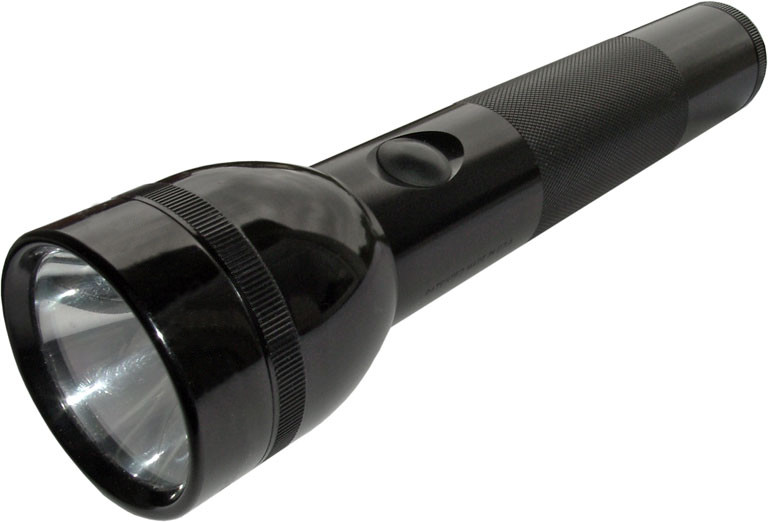
72-hour kit: Flashlights


Every 72-hour kit should include a flashlight AND batteries.

Do not keep the batteries in the flashlight while it is being stored.

Having head-lamp type flashlights are a great idea considering you may have your hands full in an emergency.

This is step 5 on the PLAN 9 pamphlet put together by the Southwest Utah Public Health Department.


See right side of blog for additional steps.

Tuesday, May 1, 2012

3-month supply: Other beverages

Obviously, water is the most important beverage to store, so if you haven't gotten your 2-week supply yet, read THIS post and make it a priority.

Once your water storage is complete, you can think about store some other beverages.

So, let's talk about your 3-month supply of beverages!!!

How much?? About 20 quarts which is 10 bottles of 64 ounces per person.

Using this 3-month supply worksheet created by Prepared LDS Family, you can calculate how much fruit drink mix (or Tang), hot chocolate and apple juice you may want to store.

Fruit drink mix or Tang- This powder can be stored for at least 2 years, unopened. For one person, store about 1.5 lbs. You will need to plan on using about 5 quarts of water for each pound of powder. You may want to store extra if you have room.

Hot cocoa- Store about 1.5 lbs per person. Canned hot cocoa can also last at least 2 years. Again, you will need to store about 5 quarts of water for each pound of powder.

Apple juice (or other fruit juice)- Store 3-64oz. bottles per person.

There are lots of other beverages that you can store like: Sports drinks, tomato and other vegetable juices or individually packaged drinks such as Capri Sun. These beverages are good to have on hand to help you and your kids stay hydrated when you're sick.


You may want to store some frozen concentrated juices as well.


Here's some information on pricing:

Tomato juice- $.02/oz.

Apple juice- Less than $2.00 per 64oz bottle is good (that's about $.03.oz). A couple of years ago, there was a case lot where the bottles were $.99 per bottle (or $.02/oz).

Sports drink- $.54 for a 20 oz bottle ($.03/oz).

Fruit drink mix- Tang at Costco has been about $1.29 per lb ($.08/oz) and the cannery mix is $1.39 per lb.

Hot cocoa- The LDS cannery price, $1.71 per lb, is definitely the cheapest around. At regular stores, the lowest price is about $2.00 per lb ($.13/oz).

Capri Sun- $.17 per drink.